The steel in your garden tools determines how long they last, how much maintenance they need, and how well they perform. The two most common types are stainless steel and carbon steel. Here is how they compare.
Stainless Steel: Low Maintenance, High Durability
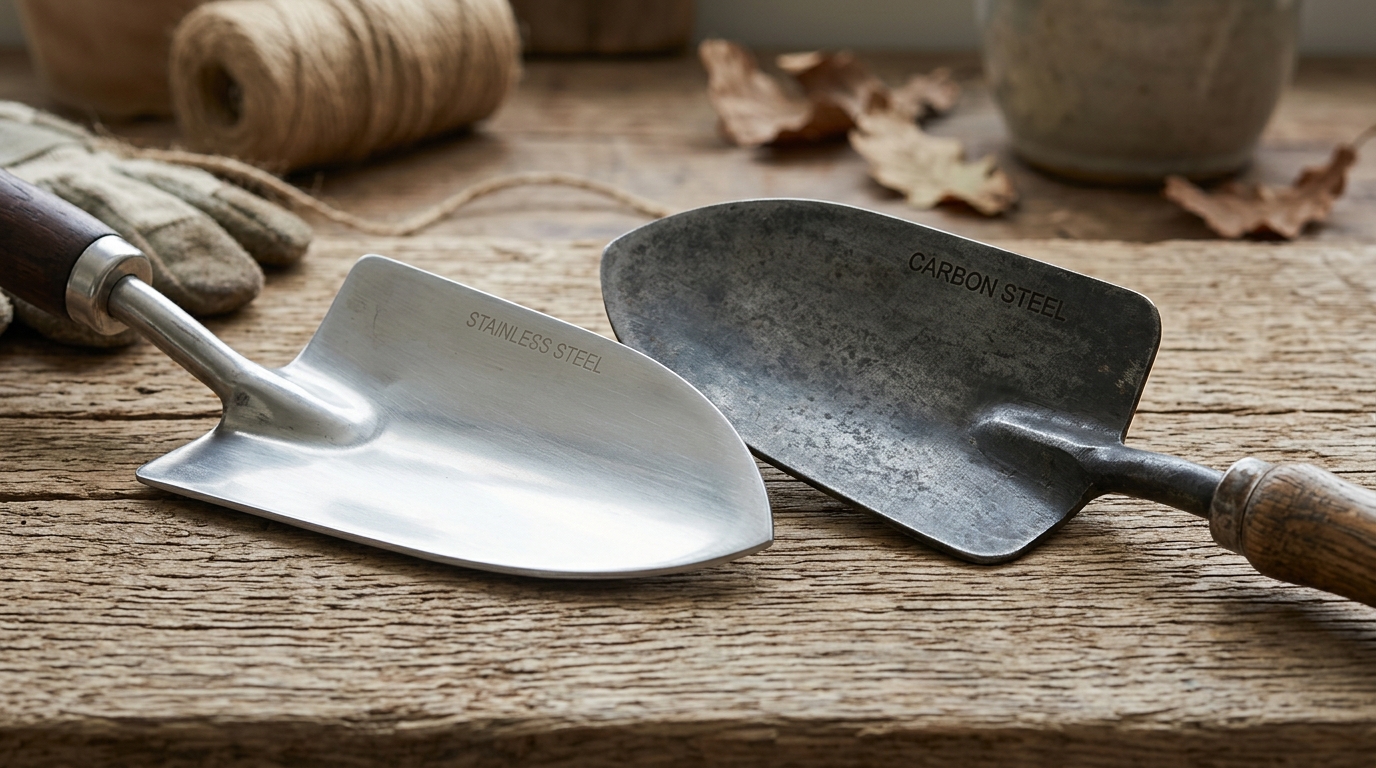
Stainless steel contains chromium, which forms a passive layer that prevents rust. You can leave a stainless steel trowel in the rain and it will not corrode. This makes it ideal for gardeners who do not want to oil their tools after every use.
The downside: stainless steel is slightly softer than carbon steel, meaning the edge dulls a bit faster. For most garden tasks — digging, planting, weeding — this difference is negligible. For precision cutting tools like pruners, you may need to sharpen more often.
Carbon Steel: Sharp and Strong
Carbon steel is harder than stainless steel, which means it holds a sharper edge for longer. This makes it the preferred material for pruning shears, knives, and cutting tools. A carbon steel pruner will cut cleaner and stay sharp longer than a stainless one.
The trade-off: carbon steel rusts. If you leave it wet, it will corrode. You need to wipe it dry after use and apply a light coat of oil periodically. For gardeners in humid climates, this maintenance can feel like a chore.
Which Should You Choose?
- Choose stainless steel for: Trowels, hand forks, cultivators, and any tool that contacts soil and water frequently.
- Choose carbon steel for: Pruning shears, knives, and cutting tools where edge retention matters most.
- Choose coated steel for: Budget options. The coating protects against rust but wears off over time.
Our Recommendation
For most home gardeners, stainless steel hand tools combined with carbon steel pruners gives you the best of both worlds: rust-resistant digging tools and razor-sharp cutting tools. Clean and dry all tools after use, and your toolkit will last for years.
Browse our collection of garden tools, pruners, watering equipment, and planters.
Shop Now